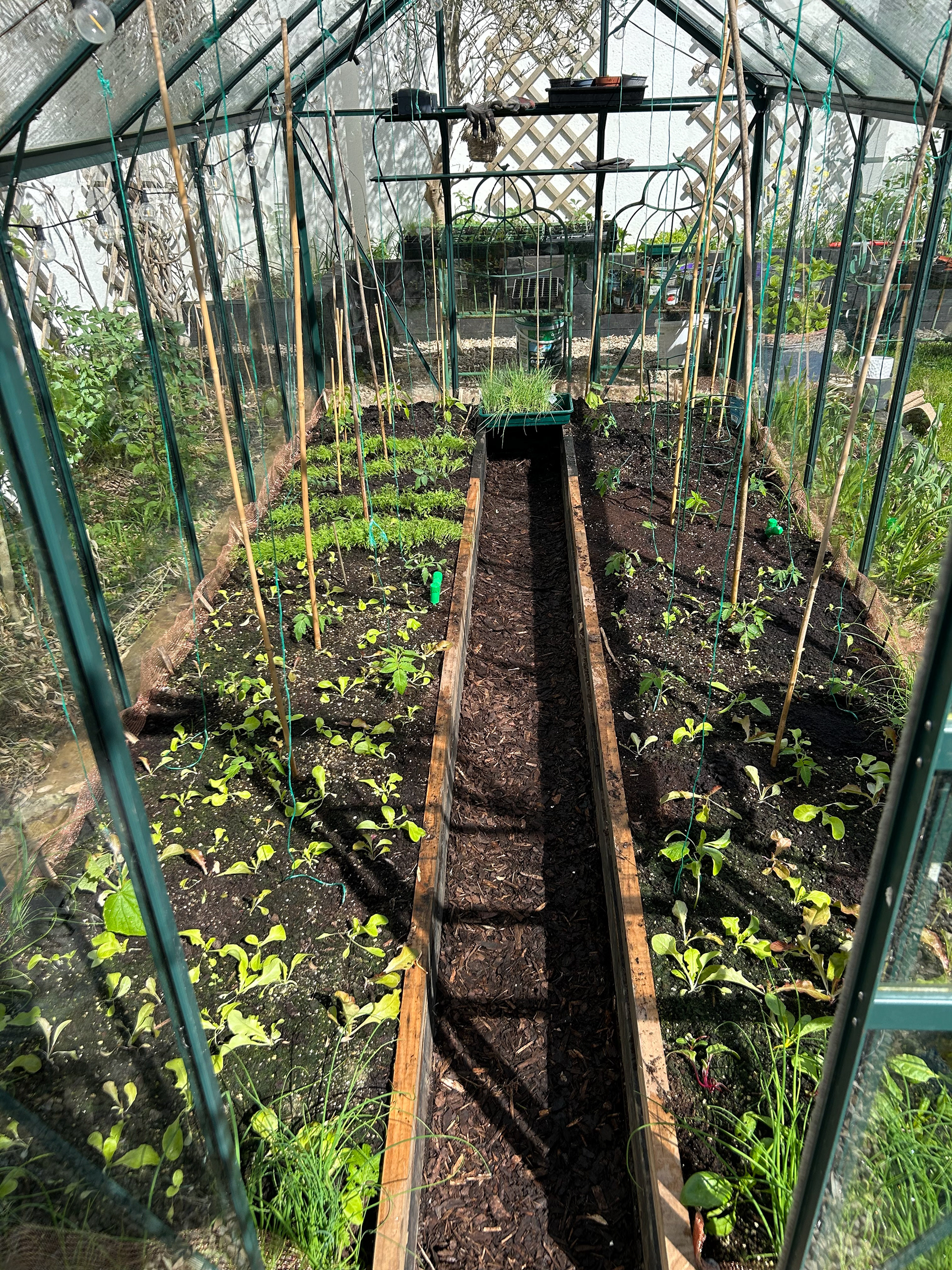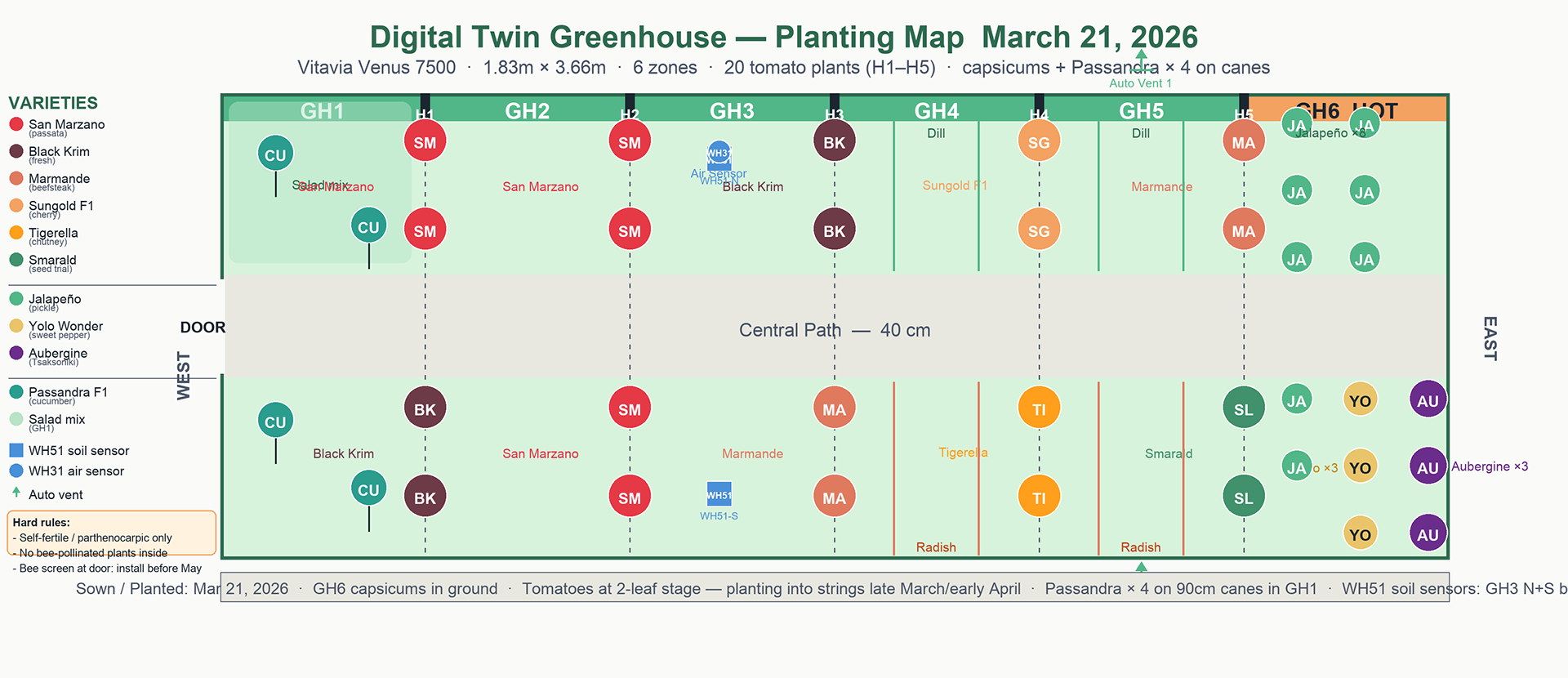
How Claude Code understands the physical mapping in the Greenhouse | March 21, 2026
Ireland currently imports 83% of its fresh vegetables. According to recent data from sustainable food advocates like GIY's Mick Kelly (The Irish Time article), only 74 field-scale vegetable farms remain across the entire country, a steep drop from over 600. That macroeconomic reality, alongside the outsized carbon footprint of importing produce, is the critical context for what follows in this article.
Where It All Started (My personal journey)
A few years ago, after stepping back from the tech world, I became something of a constant gardener—in the John le Carré sense. I was mindful of buying veg imported from thousands of miles away. I shopped at local markets, avoided plastic packaging (even if plastic genuinely does extend shelf life), and immersed myself in the GIY (Grow It Yourself) movement. Early influences shaped the path: I discovered Charles Dowding’s No Dig methodologies, later found the high-density ecosystem management of Canada’s The Market Gardener* (Jean-Martin Fortier), and looked locally to pioneers like Green Earth Organics in Galway (Jenny & Kenneth Keavey), who prove that sustainable, organic growing can thrive in the Irish climate. To be fair, I was still buying 49c lemons at the supermarket (price elasticity and consumer behaviour is an article for another day).
Progress was incremental, with a significant milestone in late 2024 when I installed a glass greenhouse. By the summer of 2025, I was harvesting kilos of tomatoes, unlimited salad, and broccoli - not too bad for a north-facing garden.
However, I was running like a madman to keep up with the chores for each variety whenever I caught a break from studying. There was no real planning. I gardened like an artist, relying on instinct rather than insight.
By the end of 2025, I couldn't afford for gardening to be my full-time gig. As AI tools continued to mature rapidly, I had a Eureka moment: reinvent the whole project as a win-win passion/ tech pursuit. I set out to build a Digital Twin Greenhouse project - the exact kind of system commercial operations spend thousands of euros on, rebuilt using open-source tools. Funnily enough, my go to AI had at that time flagged that I should drop "Digital Twin" from my resume as it's a buzzword. I carried on anyway; the ATS is a mysterious world, and in this instance I knew better.
Fresh out of my studies, I drafted three primary product goals to transition this from a hobby to an engineering venture:
1. Maximise yield and minimise maintenance (The Operational goal).
2. Go from incremental to 10× learnings (The Research goal).
3. Deploy a 2026 tech stack (The Product goal - a win-win for returning to the tech sector).
2. Go from incremental to 10× learnings (The Research goal).
3. Deploy a 2026 tech stack (The Product goal - a win-win for returning to the tech sector).
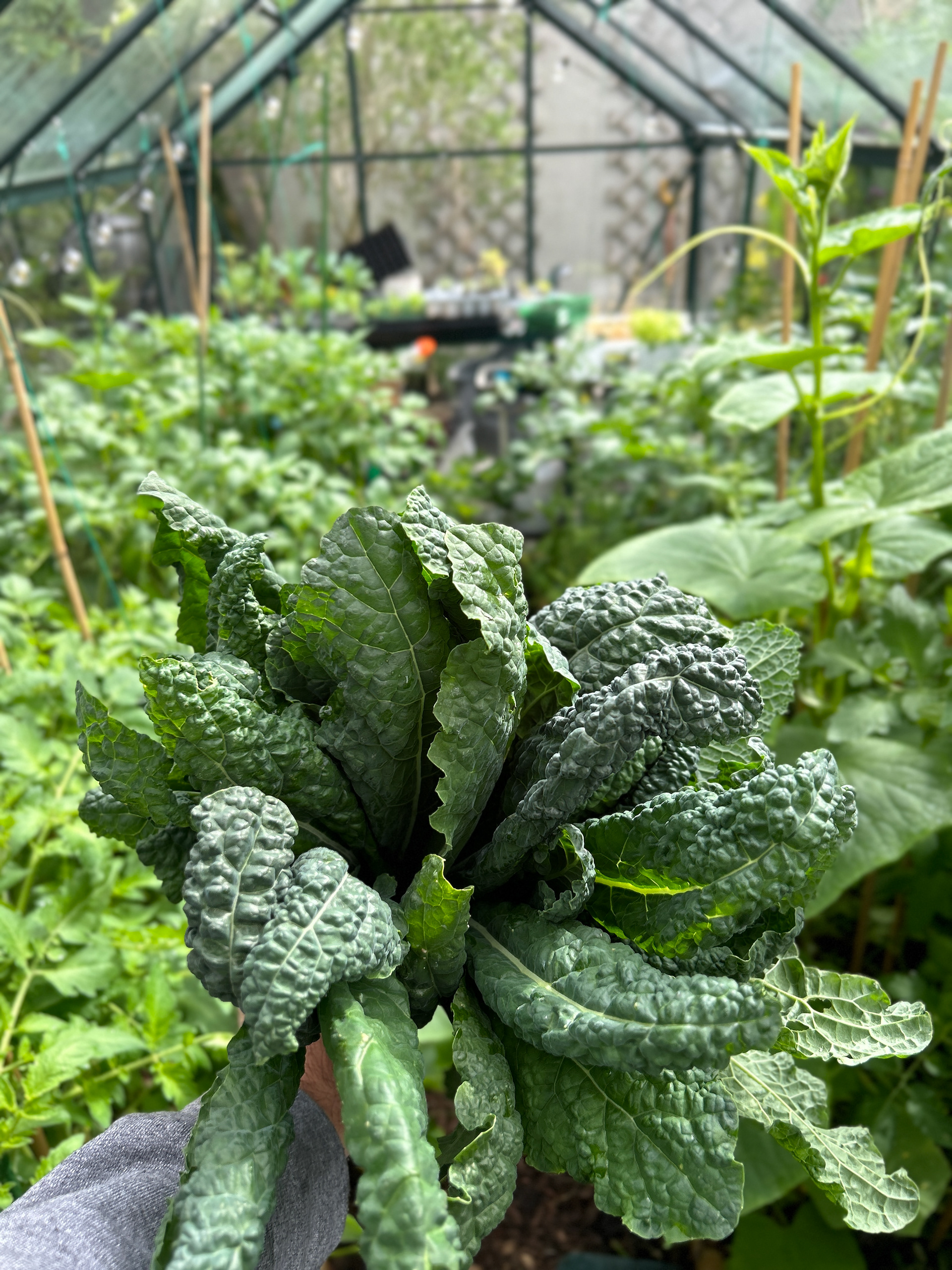
2025
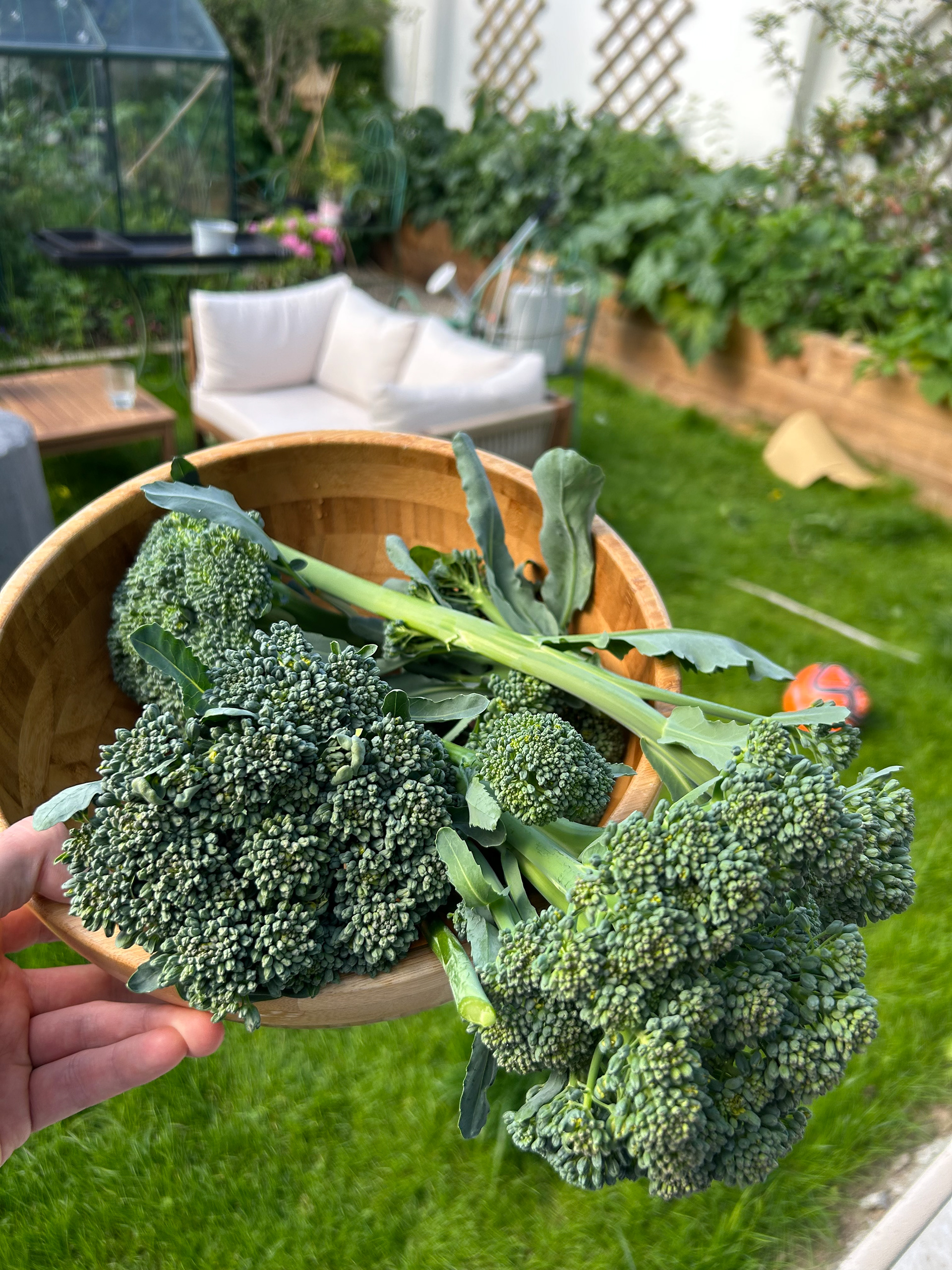
East Wall Bays in background (2025)
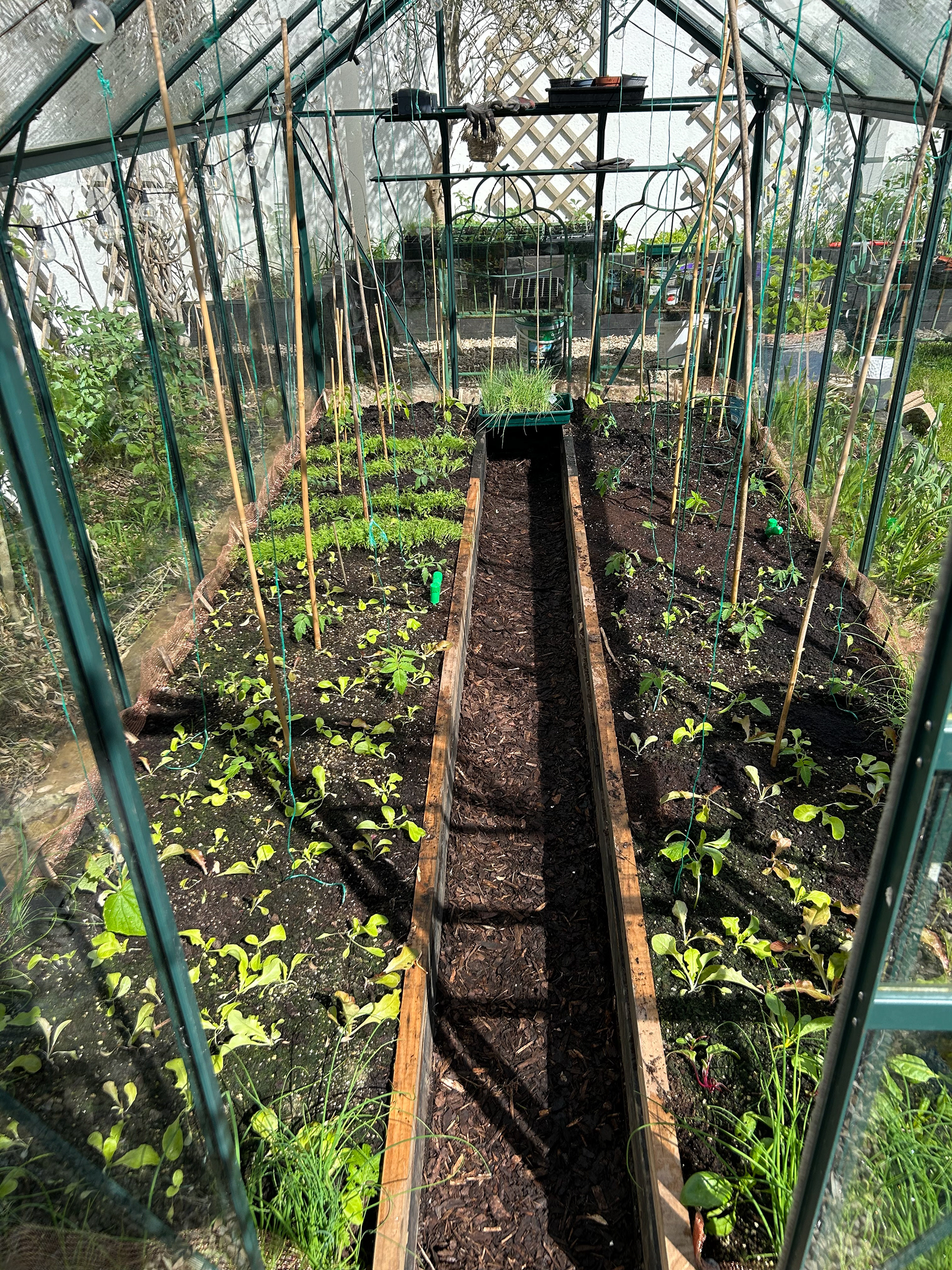
2026 GH
Building The Digital Twin
January '26 — The Data Foundation
I began by using Gemini to build a comprehensive Knowledge Base for seeds and equipment inventory. There was manual input on my side, but Gemini was great at generating 20+ columns per variety: sowing windows, pest issues, companion plants, care requirements, pollination needs etc.
Then, something clicked - Gemini naturally clustered everything around my first objective (1), with varieties grouped in 6-7 clusters. Tomatoes and peppers belong in the greenhouse. Brassicas need a fruit cage outdoors because cabbage whites are relentless. It’s simple logic, but having an AI surface these relational insights saved me an entire season of trial, error, and guesswork.
At this stage, the main limitation surfaced as I was trying to keeping static files current and building this Knowledge Base manually was incredibly time-consuming. More importantly, the LLM’s answers lacked physical context - they weren't grounded in my actual garden layout or local microclimate. A chat interface is excellent for brainstorming, but it fails as an automated, continuous operational hub.
The Tipping Point: I sketched the exact dimensions and orientation of the greenhouse and gave the AI a spatial coordinate system to work from. My ambition is for the AI to eventually see the garden natively, inspired by the cutting-edge real-world modelling happening at AMI Labs (Yann LeCun). To execute this, I abandoned static files and switched to Claude Code and Google Antigravity as my primary engineering environments. This gave the project the scalable, autonomous platform I desperately needed, since time was running out (jan-mar are big seasons for sowing).
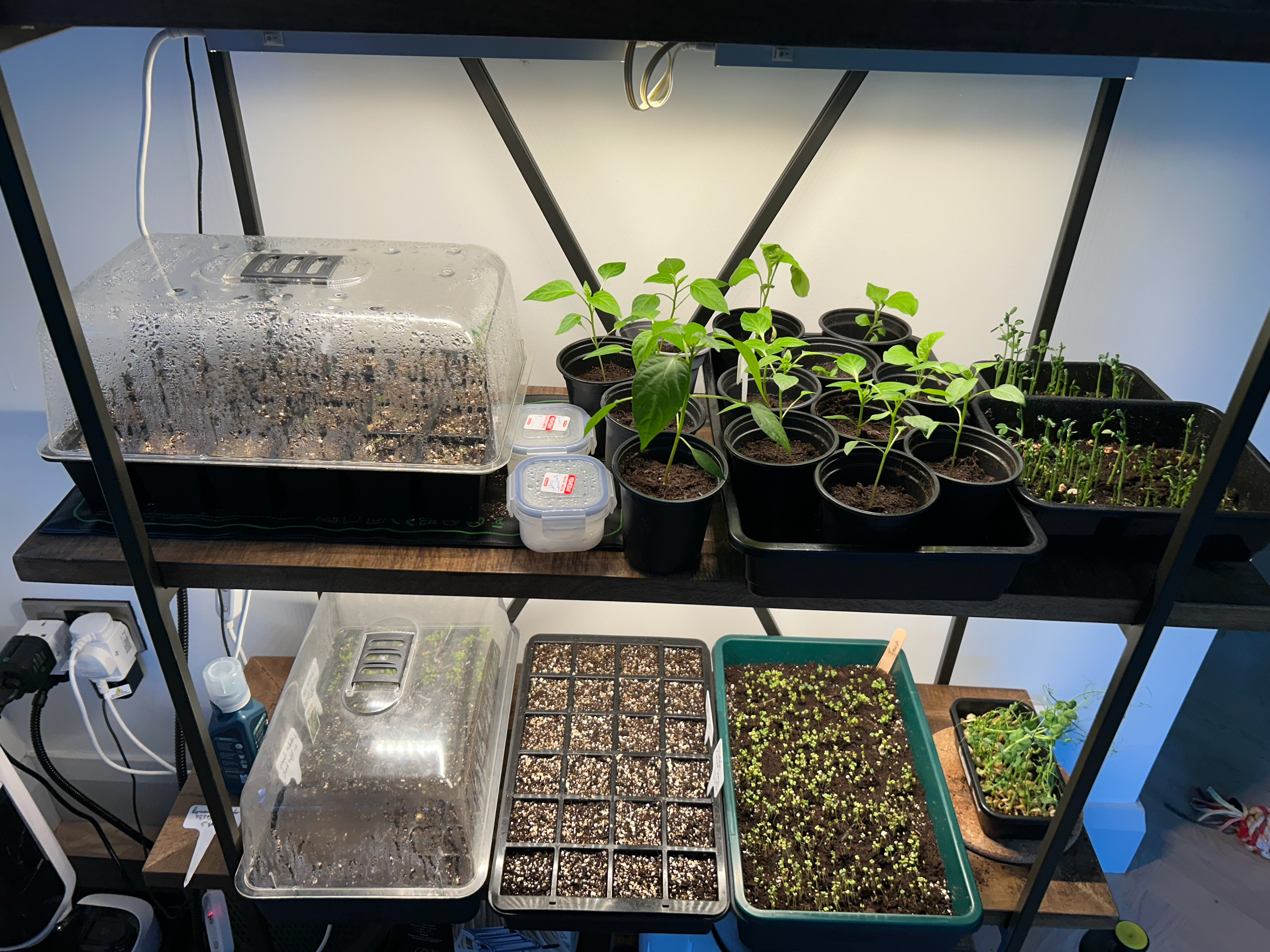
Seedlings in January - AI aware of the number of seeds, germination rate according to seed pack, and target number of plants for the growing space.
The Greenhouse: What's Growing
As you can see in the cover photo, the Vitavia Venus 7500 is approx. 8m², split into six distinct zones.
- GH1 (Entrance): Salad, spinach, and Passandra cucumbers grown on vertical strings.
- GH2–GH5: Five tomato varieties (San Marzano, Black Krim, Marmande, Sungold F1, Tigerella) on single-stem cordons, requiring weekly training and deshooting.
- GH6 (The Hot Zone): 26 capsicums (pepper, jalapeño) and aubergines packed tight against the east wall where thermal mass accumulates heat.
Crucially, the AI is aware of the spatial coordinates of every single plant (e.g., `GH1S` = Greenhouse Zone 1 South). It might sound like overkill, but it allows for granular A/B testing on plant spacing and entirely removes the need for physical labels. My system knows what is planted where. Also easy for me to query any issues with the plant in GH5S :).
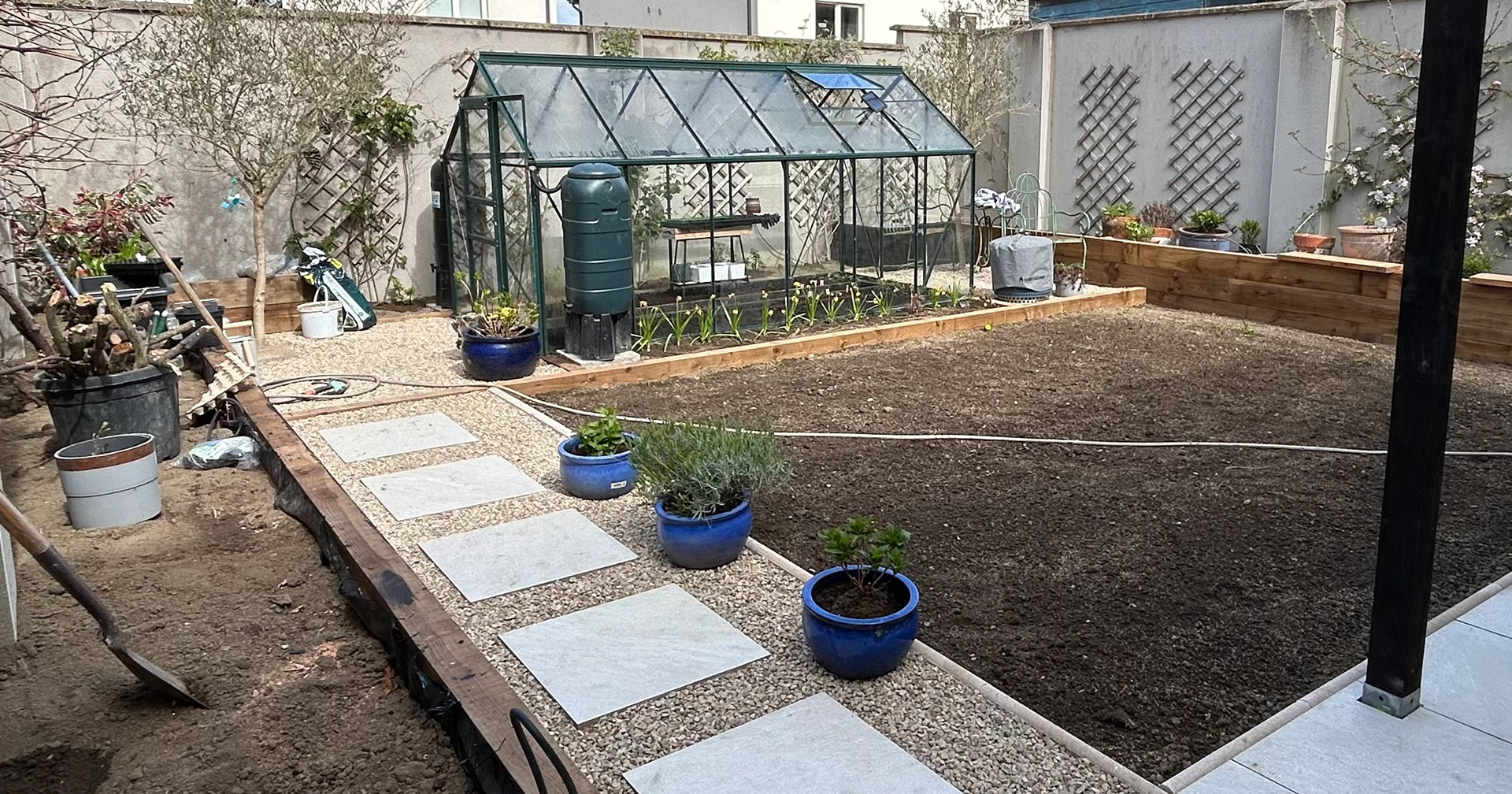
Outdoors, I manage another 8–9m² across seven east-wall bays containing climbing beans, kale, kohlrabi, squash, beetroot, leeks, and fruit trees. Most soil and plant feeding are organic.
The Technical Stack
As I was embarking on the go big or go home pathway, I realised that soil/ air sensors are limited without actionable telemetry. And that I don't have the tech stack to connect all pieces of this ever growing puzzle.
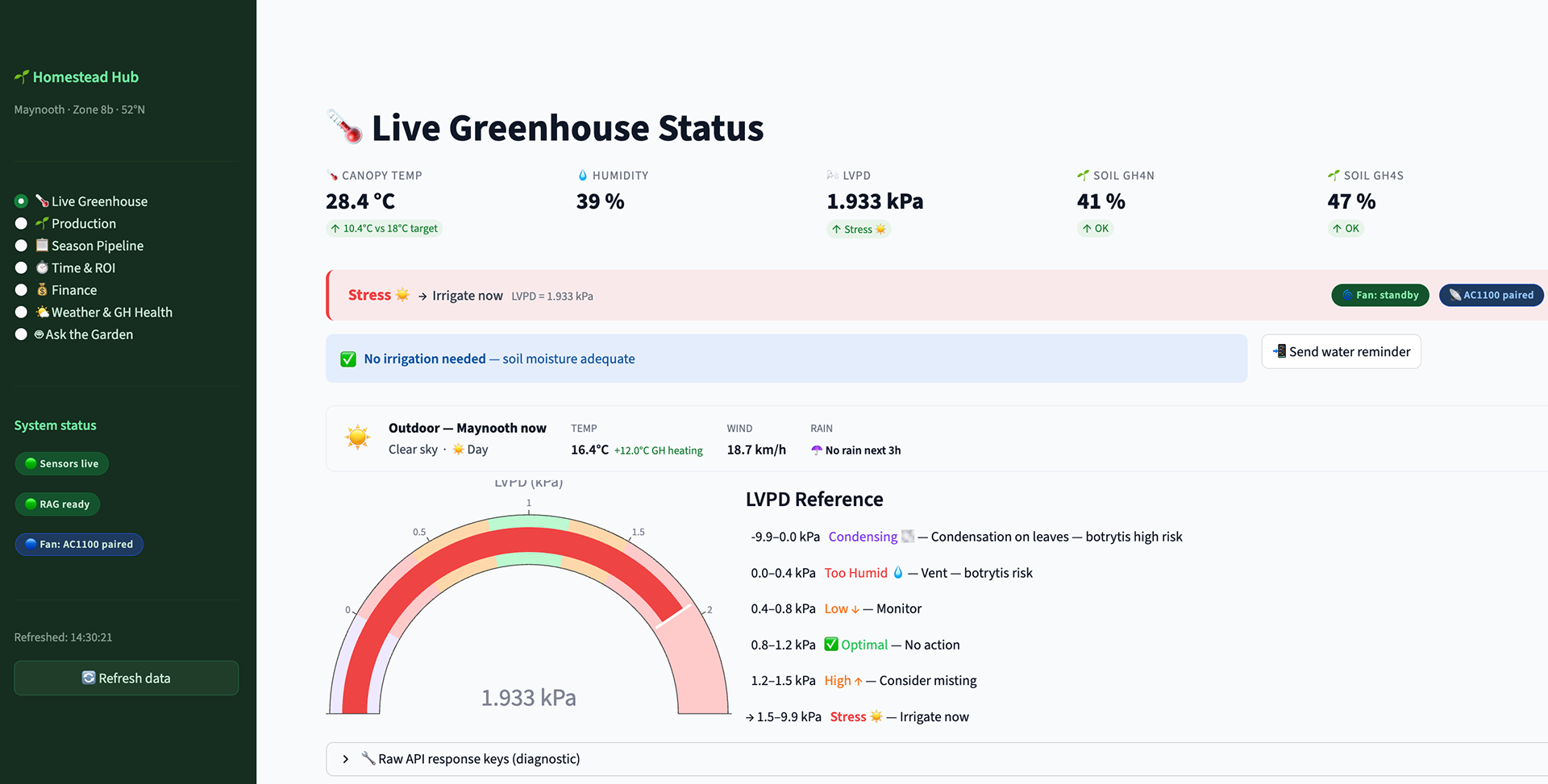
Streamlit dashboard
The Physical Layer
The network is anchored by an Ecowitt GW3000 hub. It receives 868MHz RF telemetry from WH31 Greenhouse sensor (temperature/humidity at 1.2m) and 2xWH51 volumetric soil moisture sensors mapped precisely to the north and south beds. An AC1100 smart plug controls the circulation fan natively within the RF ecosystem. And and WFC01 will trigger irrigation based on some complex calculation (time based irrigation is inefficient).
Data is exported through Ecowitt API using a poller and written to an InfluxDB; Streamlit and Grafana display all the relevant data (including Weather forecast, Harvest log, current status, Finance/ Purchases/ RAG for questions etc.). Alerts and other workflows through n8n trigger notification via Pushover. It is important to account for all external factors before triggering actions like ventilation or irrigation.
Integrating the Weather (Historic, Forecast)
This project is inherently a localised weather experiment. A greenhouse’s thermal envelope is tightly coupled to external weather conditions. To model this, a local Python poller constantly queries Open-Meteo API alongside the physical sensors.
It ingests hourly resolution data for 53.38°N, 6.59°W: air temperature, relative humidity, wind speed, precipitation, reference evapotranspiration (ET₀, FAO-56 Penman-Monteith), and outdoor Vapour Pressure Deficit (VPD).
By combining **indoor telemetry** with **exogenous weather features**, I am building the exact same feature matrix used in enterprise building energy load forecasting. Understanding the outdoor VPD at night predicts whether sealing the greenhouse will push indoor humidity into dangerous, fungus-breeding saturation levels.
Most of this sounds like overkill for a hobby. But time is scarce for just a hobby, and these exact methods are used in professional growing operations, hence I get the benefits of 10 yrs of learnings. It also showcases that Ireland can move up the number of 74 field-scaled veg farms if the policy is right.